
Implant Treatment
Implant Treatment
Recreate Your Smile the Right Way
Implant Treatment Procedure
Anesthesia
local anesthesia or sedation
Treatment Duration
20 - 30 minutes
Stay in Istanbul
3 to 5 days
Return to Social Life
Same Day
Add Your Heading Text Here
What Is Implant Treatment?
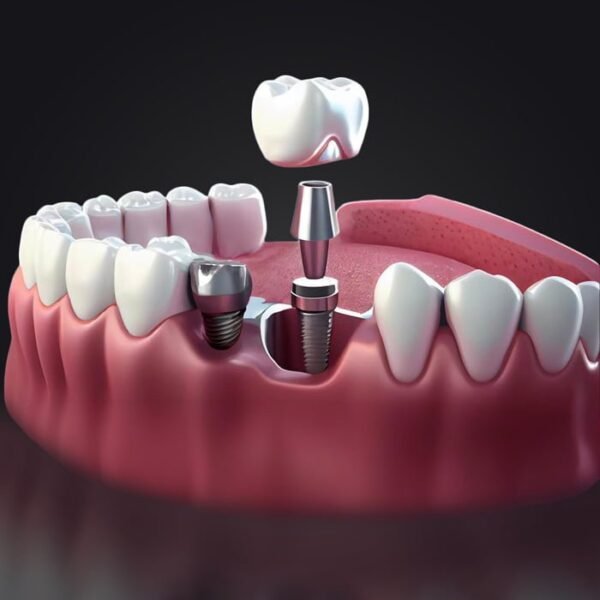
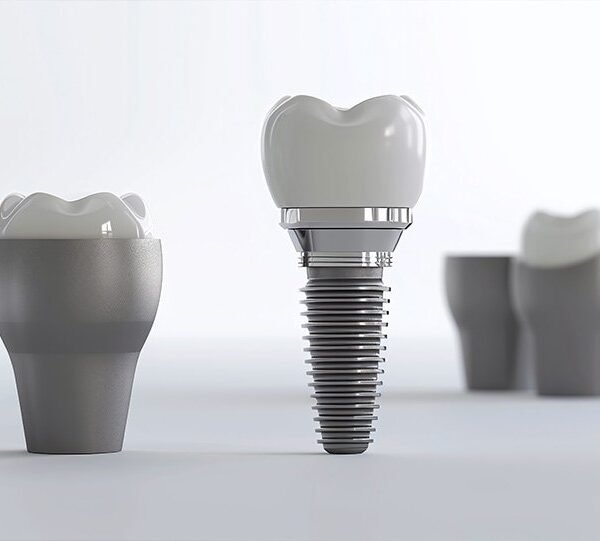
Implant treatment uses an artificial tooth root to replace a missing tooth, with a root and upper structure that imitate a natural tooth. The implant, usually made of titanium, is surgically placed in the jawbone and acts as a natural root to meet the functional and aesthetic needs of the lost tooth.
Implant treatment offers the comfort and aesthetics of natural teeth and, unlike a bridge or denture, is performed without harming the neighboring teeth. Thanks to its longevity and strong structure, it stands out as one of the closest alternatives to a natural tooth.
What Are the Advantages of Implant Treatment?
Thanks to implant treatment, bridge treatments, once used frequently, have started to decline rapidly. Implant treatments have brought an end to the era of cutting down 2 neighboring teeth to use as bridge abutments because of a single missing tooth. With implant treatment, a single-tooth gap can be filled without any harm to the neighboring teeth. It is easier to maintain and clean than a bridge. An implant functions like a natural tooth and looks the same. It is almost impossible to tell an implant from a natural tooth.
Who Is Implant Treatment Suitable For?
Implant treatment is generally suitable for people with a healthy jawbone and good overall oral health. People who have lost a single tooth but have healthy surrounding teeth are ideal candidates. For implant treatment, the jawbone must be thick and tall enough to support the implant; therefore, additional treatments may be needed when bone density is insufficient.
What Should Good Implant Treatment Look Like?
The integrity of the implant and the prosthesis placed on it is very important. The design of the implant screw and the abutments chosen at the prosthetic stage are crucial for the long-term success of single implants.
- The prosthetic part of the implant must not loosen or fall off.
- If possible, the cemented method should be avoided.
- If it is chosen, cement residue must be cleaned away very thoroughly so that it does not harm the bone around the implant.
- In patients who clench their teeth, the porcelain design must be considered carefully.
- Food debris must not accumulate around the implant or between the teeth.
Can Implant Treatment Be Applied to Everyone?
For implant treatment to be possible, the patient’s active growth must be complete and there must be enough bone. Because the implant acts as a tooth root, the better the quality and strength of the bone around the tooth, the more successfully the screw will anchor in the bone.
What Are the Nutrition Recommendations After Implant Treatment?
After implant treatment, it is very important to pay attention to your eating habits to support the healing process. During the first 24-48 hours, cold foods and drinks should be preferred to reduce pain and swelling. Soft and cold foods such as yogurt, pureed vegetables, soup and ice cream are recommended. For the first few days, hard foods that require chewing should be avoided; instead, a diet of liquid and soft foods is recommended.
How Is Stitchless (Flapless) Implant Treatment Performed?
Stitchless implant treatment is a method that does not require sutures when the implant is placed. In this method, the implant surgeon uses a special technique to place the implant directly into the gum. Stitchless implant treatment includes the following steps:
Before stitchless implant treatment begins, an oral and dental health check and examination must be carried out. The dentist evaluates the patient and determines whether stitchless implant treatment is suitable. The dentist assesses the patient’s oral health history, gum health, intraoral examination results, bone density and other factors.
In addition to the physical examination, the jawbone must be examined in more detail. Radiological imaging should be performed for this.
The jawbone is examined in three dimensions on a computer, giving access to detailed information about the patient’s bone structure.
Stitchless implant treatment is then started under local anesthesia.
A small circular area is opened in the patient’s gum with the help of a laser.
In stitchless implant treatment, the implant is placed in the area that has been prepared.
After the implant is placed, an additional step is applied to prevent pain that could occur in the treated area.
Healing time is shorter than with classic implant treatment. The missing tooth is treated with only a small intervention in the gum and jawbone.
Advantages of Stitchless Implant Treatment
Disadvantages of Stitchless Implant Treatment
Stitchless implant treatment has many advantages over traditional implant treatment. Some of them are:
- Less invasive: Stitchless implant treatment is less invasive than traditional implant treatment. As a result, the surgery can be less painful and uncomfortable.
- Faster healing: Stitchless implant treatment offers a faster healing process than traditional implant treatment. After a classic implant is placed, swelling, pain and discomfort may be felt in the teeth and mouth. Stitchless implant treatment helps prevent this.
- Fewer visits required: Stitchless implant treatment requires fewer visits than traditional implant treatment. As a result, dental visits and the overall treatment process can be shorter for patients.
- A more natural look: Stitchless implant treatment can provide a more natural look in the area where the implant is placed. This allows patients to smile and speak comfortably around other people.
- Lower risk of complications: Stitchless implant treatment carries a lower risk of complications than traditional implant treatment, reducing the risk of unwanted outcomes. Especially in patients with gum disease or infection, stitchless implant treatment can be less risky.
Although stitchless implant treatment has many advantages, it also has some disadvantages. Some of them are:
- Higher cost: Stitchless implant treatment can cost more than traditional implant treatment. It may therefore be a less suitable option for some patients.
- Limited applicability: Stitchless implant treatment can be a successful option in suitable patients. However, patients must meet certain criteria for it to be applied. It may therefore not be suitable for everyone.
- Implant stability: Stitchless implant treatment depends on the bone density at the implant site. In patients with insufficient bone density, implant stability problems can occur.
- The dentist’s experience: Stitchless implant treatment requires a more technical procedure than traditional implant treatment. The dentist’s experience and training are therefore important for the success of this treatment.
Although stitchless implants have some disadvantages, they can be an advantageous option for suitable patients. To determine the right treatment option, it is important to consult a dentist or implant surgeon.
Frequently Asked Questions
Implant: The neighboring teeth are not touched at all. Only an artificial root is placed where the tooth is missing. It prevents bone loss.
Bridge: The two healthy teeth next to the gap must be reduced (trimmed). An implant is a much more conservative method because it protects your healthy teeth.
The surgical stage (placing the implant in the bone) usually takes 15-30 minutes . However, for the implant to fuse with the bone (osseointegration), a wait of about 2-4 months is usually needed. At the end of this period, a permanent porcelain tooth is fitted on top.
Especially for missing teeth in the front area, so that the patient’s social life is not affected, temporary teeth are fitted. This way the gap is not visible while the implant heals.
No, today implant procedures have an extremely high success rate (98%). Because the procedure is performed under regional (local) anesthesia, no pain is felt during treatment.
At first glance it may seem more costly than bridge treatment. However, with a bridge you pay for 3 teeth and the bridge may need to be replaced every 10-15 years. An implant is the most economical and most permanent solution in the long run.
If there is no infection in the area and the bone structure is suitable, “immediate implant” an implant can be placed in the same socket at the moment of extraction using the method called an “immediate implant”. This is a very advantageous method that shortens healing time.